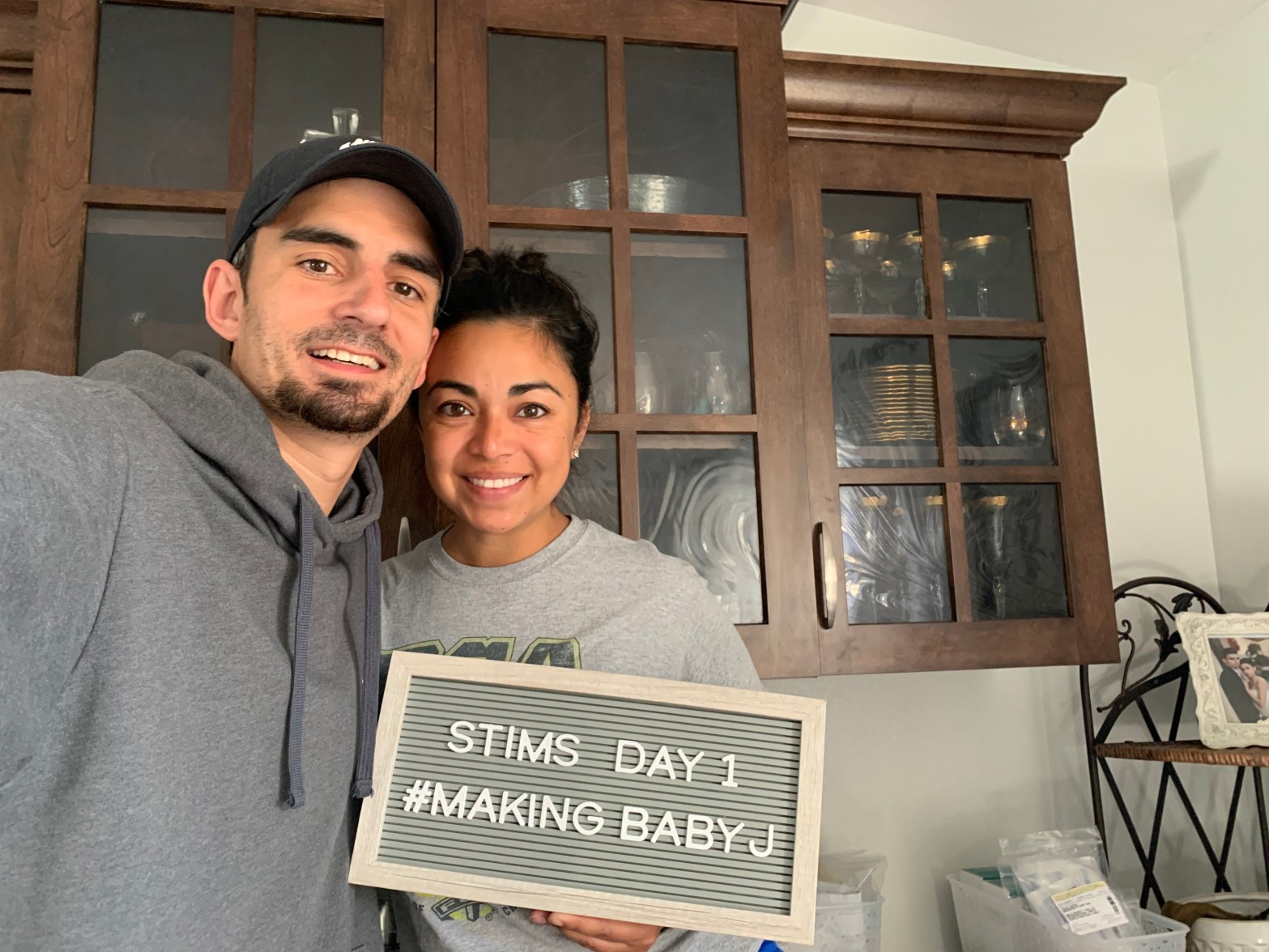
Infertility. Such an ugly word. A hopeless word. A word full of impossibilities and emptiness. A word I don’t like to say out loud because is feels like ick. It feels embarrassing. It feels shameful. It feels scary. Absolute. Final.
What I’ve learned over the past year and a half (while educating myself about the “I” word) is that infertility does not mean impossible; it does not mean hopelessness. It’s not embarrassing or shameful–it’s simply, or rather not simply, a medical condition.
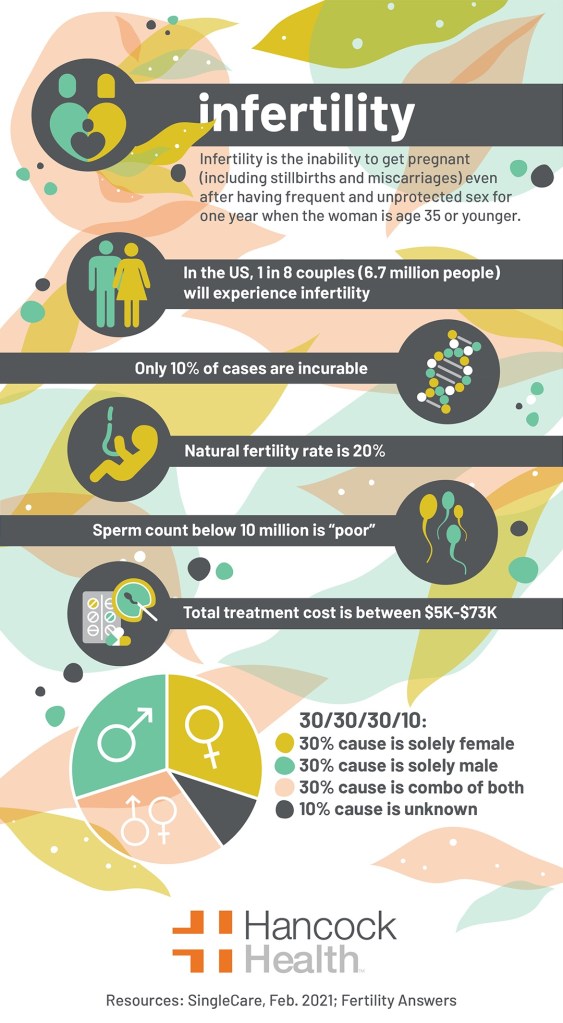
We had a second opinion, and a third, and a fourth. Male factor infertility was our diagnosis. We sought out the best fertility specialists and searched for more answers in 2020. We were given a .5% chance of a natural conception to live birth. Our percentage of success of IUI (commonly known as the “turkey baster” method), which was covered one time by insurance, was 1.5%. Our percentage of success with IVF (picture: petri dish) was 60% (not covered by insurance), and our chance with ICSI (the newer, more precise model of IVF) was a 70-80% chance of live birth per embryo (definitely not covered by insurance). It was a no-brainer that ICSI was the way to go; it virtually eliminated the factor for our infertility altogether.
There are so many tests that must be done on the woman to ensure there is no other factor contributing to a couple’s infertility (there’s that word again). After countless visits to numerous doctors and specialists, the results came back. Everything looked good with my body. My AMH was above average, FSH looked good, tubes were open, and to quote the doctor, “uterus looks great!” We were optimistic.
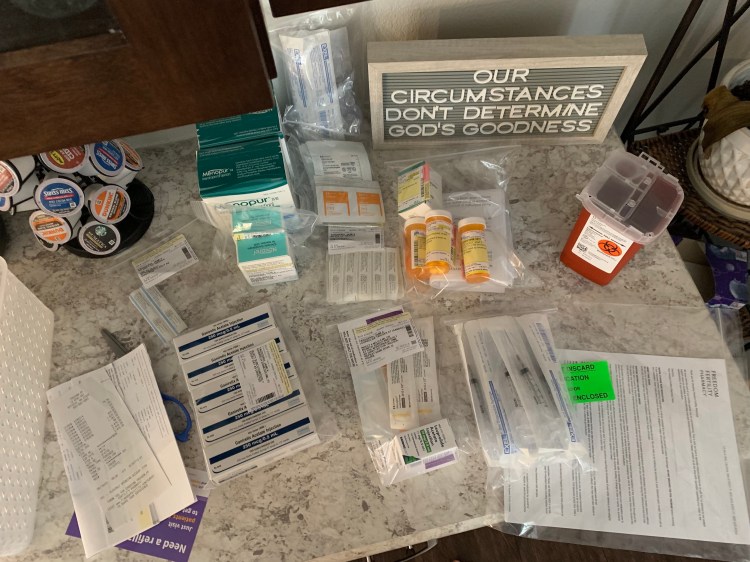
The next step toward parenthood was to go through an egg retrieval. If you are unfamiliar with the egg retrieval process, it’s a phase of about two to three weeks in which the woman is injected with multiple hormones daily in order to create as many eggs as safely possible, or are necessary in order to succeed in the family plan (our hope was enough for three children).
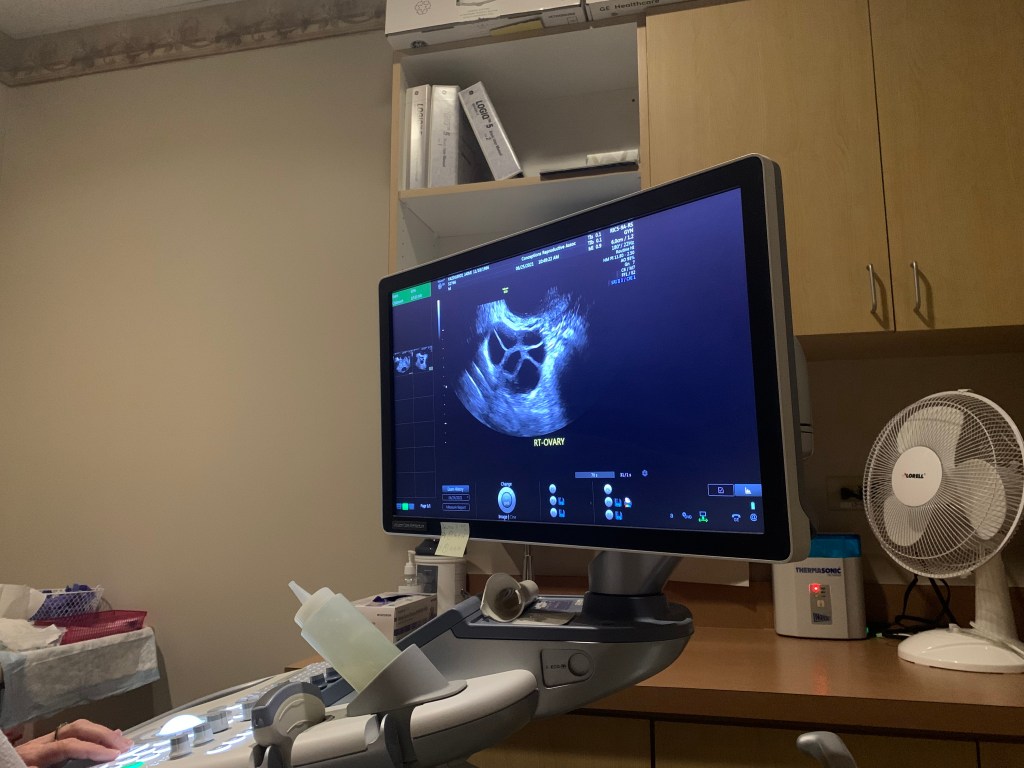
In a normal month, the female body produces and releases one egg. In this month, my body produced 24 eggs. My ovaries worked over time (ovary-time, there’s a joke in there somewhere), and we were blessed with amazing retrieval numbers. We were an open and close case–until we weren’t. We used ICSI to eliminate the male factor as our embryologist would hand-select the best quality sperm from the sample to inseminate the egg (It’s fascinating what they can do under the microscope!). From 24 eggs retrieved, to 18 fertilized embryos with ICSI, to 5 blastocysts, to 0 genetically normal, transferrable embryos. Our first $25,000 gone. Flushed. Hope lost. Hearts broken. Knowledge gained. Four out of the five embryos were unviable due to qualities of DNA on the maternal side, since ICSI essentially removed poor quality on the paternal side. So much for male factor only.
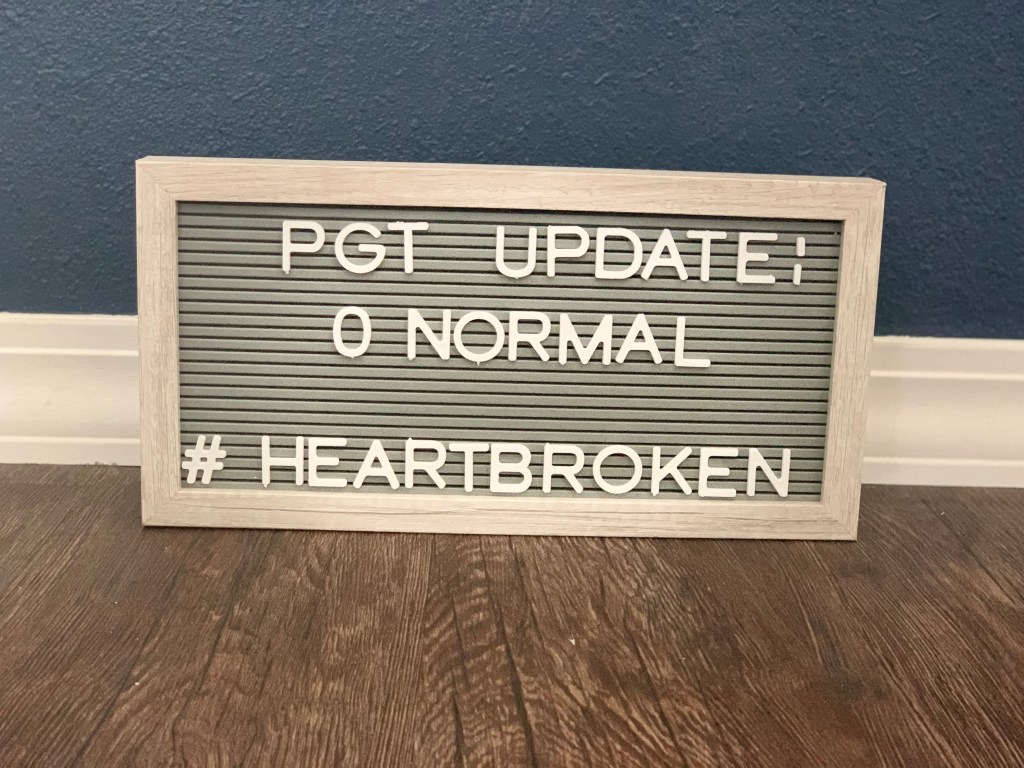
At our regroup with the doctor, we learned that poor egg quality could have never been detected had we not gone through the egg retrieval process and opted for genetic testing on the embryos. Expensive science experiment.
I am so thankful we have an unwavering faith. One that is built on a strong foundation. Our faith doesn’t keep us from pain or confusion, but it reminds us of the big picture and the promises of eternity. The unexpected result of zero viable embryos was tough to swallow. Psalm 34:18 says, “The Lord is near to the brokenhearted and saves the crushed in spirit.” We knew and believed He was near to us even though we did not feel it at the time.
 The Ordinary Believer